Manja - Attraction Guide
Manja
Planning a trip to Madagascar/Manja?
Share your travel plans and get free itineraries and quotes from multiple trusted local operators.
10k+ travelers have submitted inquiries
Manja, Madagascar: A Stopover on the RN9
Manja sits on the RN9 in the Menabe region of western Madagascar, roughly 170 km south of Morondava and 285 km north of Toliara, at an elevation of about 253 metres. For most travellers it is not a destination in itself but a necessary overnight halt on the long coastal route between the Avenue of the Baobabs and the beaches around Ifaty — a working town of roughly 20,000 to 30,000 people where you sleep, eat, refuel and move on.
That framing sells the place short, though. Manja is one of the few genuinely untouristed towns left on the western circuit, and the hour you spend walking its red-earth streets before dinner tells you more about everyday Malagasy life than a week of lodge verandas.
Want to visit Manja?
Compare 5 quality local operators, get custom itinerary and exclusive quotes
Where Manja Fits on the Map
Understanding the geography explains almost everything about how a visit here works.
Location and coordinates
Manja is the capital of Manja District, which covers around 9,073 square kilometres within Menabe Region — the district's population was estimated at 111,430 in 2020. The town itself lies at approximately 21°26′ south, 44°20′ east, in flat, dry country where seasonal rivers cut through savannah and remnant dry forest. The climate is tropical savanna (Aw), with annual rainfall around 671 to 815 mm depending on the dataset, almost all of it falling between December and March.
Why the RN9 matters
The RN9 links Toliara to Morondava and passes through Manja. The southern stretch from Toliara to Manja was newly surfaced in June 2023 and is, by several riders' accounts, the finest road on the island — smooth, empty, and with almost no fuel stations along it. North of town the surface gives out. The 140 km to Morondava is dirt, sand and river crossings, and drivers routinely budget eight hours for it. A 900-metre bridge over the Mangoky at Bevoay has been under construction with completion targeted for late 2026; until it opens, vehicles cross by barge, and waits of several hours are normal in the rainy season.
The town's role in a western itinerary
Manja breaks the run between Belo-sur-Mer and Morombe, or between Morondava and Andavadoaka. Tour operators almost universally schedule one night here. Cholantours' 18-day programme lists a single night in Manja; Wild Frontiers' 22-day Madagascar Encompassed does the same. My own view: one night is right, two only if you want to sit still and do nothing, which is a legitimate ambition in this part of the country.
What to Do in and Around Manja
There is no ticketed attraction, no visitor centre, no opening hours. The town is the attraction.
Walk the market at dusk
Manja's market is the reason the town exists for the surrounding countryside. It is busiest in the late afternoon and at dusk, when people from outlying villages come in and the main street fills with taxi-brousse, pousse-pousse, ox carts and pedestrians all negotiating the same few metres of road. Hooting helps. Nobody gets upset.
Expect zebu meat laid out in the open heat, rice, dried fish, charcoal, cheap Chinese hardware, and produce from the small irrigated plots along the seasonal rivers. I would not buy raw meat here unless you are cooking it yourself that evening to a very high temperature — the day-long display in 35°C heat is exactly what you would expect. Bottled water, soft drinks, biscuits and fruit are fine.
Look at the dry forest edge
The land around Manja is western dry deciduous forest and thorn scrub, with baobabs scattered through it. The drive in from either direction is the real scenery: tamarind shade trees, rice fields clustered around river oases, and villages that are visibly better-off where water is reliable. Birdlife is decent along the riverbeds, though you need patience and early starts.
Use it as a base for Kirindy Mitea
Kirindy Mitea National Park lies to the north-west, between Morondava and Belo-sur-Mer, protecting around 72,000 hectares where spiny forest meets mangroves and coastal dunes. It holds 11 mammal species including four lemurs, 47 bird species and 23 reptile species, alongside three baobab species and seven mangrove species. A pirogue transfer into the park is sometimes possible from Belo-sur-Mer depending on tides — it is not a Manja day trip, but it belongs in the same stretch of road.
Sakalava country and its etiquette
Manja sits in Sakalava territory; the Menabe kingdom once controlled the western coast from here north to Mahajanga. Local fady (taboos) are real and observed. At royal shrines and ancestral sites, red clothing is prohibited, shoes come off, photography needs permission, and a local guide is effectively mandatory. If you plan to stay longer in any village, tell the local authority or village head first. This is not bureaucratic padding — it is how you avoid causing offence in a place with no tourist infrastructure to absorb mistakes. Outside protected or sacred sites, ordinary courtesy covers almost everything.
Practical notes on the stopover itself
There is one hotel, the Kanto, in the centre of town. Rooms are en-suite bungalows at budget prices — a forum post from 2014 quoted 50,000 ariary, and while that figure is old, the category has not changed. Expect a fan rather than air conditioning, a mosquito net, a decent mattress, and neighbours close enough to hear. The open-air restaurant cooks over a traditional fire and the food is better than the rooms. Staff speak French, not English. It is noisy from early morning because the hotel fronts the road to the market — that is the trade-off for being in the middle of everything.
Fuel up before you arrive or as soon as you can; between Toliara and Morondava, filling stations are scarce and roadside vendors selling petrol in bottles are the practical alternative. Carry cash in ariary. Police and community checkpoints on this stretch are common, and the Morondava–Belo–Manja corridor is specifically known for them. Keep documents accessible, stay polite, and let your driver handle negotiations.
When to Go and How Long to Stay
The dry season runs roughly April to November, and that is when the tracks north of town are passable and the roads pleasant.
Climate by month
The coolest, most comfortable window is late May to mid-September, when daytime highs sit below 29°C and July nights drop to around 12°C. Rainfall in July averages about 1 mm. The hot season runs from late September to late December, with December highs averaging 33°C and lows around 21°C. January is the wettest month at roughly 300 mm, and the cyclone season stretches from early November to late April. Independent travel writers consistently name May as the sweet spot — dry, not yet cold at night, and before the crowds that never really arrive here anyway.
How long you actually need
Less than a day. Most operators allocate one night, arriving late afternoon and leaving after breakfast. If you are self-driving and want a slower rhythm, two nights lets you walk the market twice, visit a village on the edge of town, and still leave early.
Getting there
By road, Manja is about eight hours from Morondava on dirt and roughly four to six hours from Toliara on new tarmac. From Antananarivo the drive is roughly 772 km and 15 to 16 hours; the practical alternative is a one-hour-ten-minute flight to Morondava followed by road transfer. Manja Airport (MJA/FMSJ) has no scheduled service — it handles private aircraft only, with a Twin Otter as the largest type that can land, and access to it crosses a river by barge limited to 10 tonnes. Do not build a plan around flying in.
Want to visit Manja?
Compare 5 quality local operators, get custom itinerary and exclusive quotes
Frequently Asked Questions
Is Manja worth stopping at, or should I drive straight through?
Stop. The distances make it unavoidable in practice — Morondava to Andavadoaka or Belo to Morombe cannot be done comfortably in one day — and the town gives you a genuine look at a western Malagasy market town. Treat it as a bed and a meal rather than a sightseeing stop and you will enjoy it.
What is the only hotel in Manja like?
The Kanto is a basic guesthouse in the town centre with en-suite bungalows, fans, mosquito nets and an open-air restaurant cooking over a wood fire. It is the sole accommodation option in the wider area, so there is no comparison to make. Reserve through your tour operator if you have one, since the hotel rarely handles direct bookings.
Do I need a 4x4 to reach Manja?
Not from the south. The Toliara–Manja section of the RN9 has been paved since June 2023 and is fine for an ordinary car. From Morondava and from Belo-sur-Mer the route is dirt, sand and river crossings, and a high-clearance 4x4 with an experienced driver is the sensible choice.
When is the best time to visit Manja?
Late May to mid-September. July is the driest month with around 1 mm of rain and daytime highs below 29°C. Avoid January, which averages about 300 mm of rainfall and coincides with the cyclone season that runs from early November to late April.
How far is Manja from the Avenue of the Baobabs?
Morondava, the gateway to the Avenue of the Baobabs, is about 170 km north of Manja. That distance takes roughly eight hours on the dirt road, which is why almost every itinerary splits the journey with a night in Manja rather than pushing through.
Can I fly into Manja?
No scheduled flights serve Manja Airport (MJA). Private aircraft can land, with a Twin Otter as the maximum size, and access to the airfield involves a river barge crossing limited to 10 tonnes. The nearest practical commercial airport is Morondava, about a one-hour-ten-minute flight from Antananarivo.
Manja |Tours
View All Tours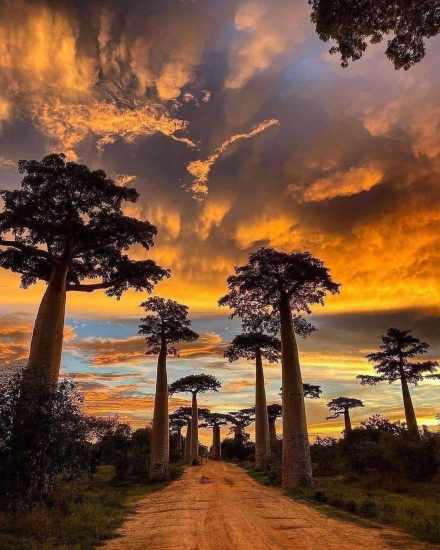

— All loaded —