Compare Top Local Operators
100% Free

Planning a trip to Tunisia?

Share your travel plans and get free itineraries and quotes from multiple trusted local operators.

Itineraries tailored to your travel plans Compare quotes from multiple local operators Connect directly with trusted local operators
Get Free Quotes

10k+ travelers have submitted inquiries

Tunisia - Travel Guide

4.5

Must-see attractions, popular activities, and featured local operators

North Africa

Tunisia, located in North Africa, offers an array of unique travel experiences that seamlessly blend historical richness with modern allure. Notable for its Mediterranean beaches, Tunisia is also home to the Sahara Desert, offering an adventurous blend of landscapes. It's packed with significant landmarks like the ancient Carthage ruins, the El Djem Amphitheatre - a testament to Roman architecture, and the stunning medina of Tunis, a UNESCO World Heritage Site. Tunisian culture is a fascinating fusion of Berber traditions and Arab-Islamic influence, reflected in its music, cuisine, and art.

Attractions

Language

Tunisia's official language is Arabic, specifically the Tunisian Arabic dialect known as "Derja." However, French also plays a significant role in Tunisian society due to the country's historical ties with France, and it is widely used in education, commerce, and the media. Therefore, many Tunisians are bilingual in Arabic and French. While English is not as prevalent, its usage is growing, particularly among the younger generation and in tourist areas. Additionally, in regions with a significant Berber population, you may hear Berber languages.

Best Time to Visit

For those seeking to enjoy the Mediterranean beaches, the summer months from June to August offer warm, sunny weather, perfect for swimming and sunbathing. However, these months can also be crowded with tourists. For a more comfortable climate and fewer crowds, consider visiting in the spring (April to June) or autumn (September to November). These seasons offer mild temperatures ideal for exploring historical sites and cities. If you're interested in exploring the Sahara Desert, the cooler months from October to March are best, as summer temperatures in the desert can be extremely high.

Month
Weather Overview
January
January is the coldest month in Tunisia, with coastal temperatures ranging from 8°C (46°F) to 17°C (63°F). The northern regions receive more rainfall, and the south remains chilly at night. Humidity levels are moderate to high along the coast.
February
February remains cool, with temperatures between 9°C (48°F) and 17°C (63°F) in coastal areas. Rain is still frequent in the north, while the desert regions experience chilly nights. Humidity stays moderate along the coast.
March
March sees temperatures rise slightly, ranging from 12°C (54°F) to 20°C (68°F) along the coast. Rainfall decreases but still occurs in the north. Humidity levels remain moderate, and the weather is generally mild.
April
April brings milder temperatures, ranging from 15°C (59°F) to 22°C (72°F) along the coast. Rain is less frequent, and the southern regions begin to warm up. Humidity remains moderate, and spring is in full swing.
May
May is warm, with coastal temperatures between 18°C (64°F) and 25°C (77°F). Inland areas start to heat up, with temperatures often exceeding 30°C (86°F). Rainfall is rare, and humidity levels are moderate to low.
June
June is the start of summer, with coastal temperatures ranging from 21°C (70°F) to 28°C (82°F). The interior heats up, often surpassing 35°C (95°F). Rainfall is almost nonexistent, and humidity levels rise along the coast.
July
July is very hot, with coastal temperatures ranging from 23°C (73°F) to 31°C (88°F). Inland areas experience extreme heat, often exceeding 40°C (104°F). Rainfall is scarce, and humidity remains high on the coast.
August
August remains extremely hot, with coastal temperatures between 23°C (73°F) and 31°C (88°F). The desert and inland regions experience intense heat, often surpassing 40°C (104°F). Humidity remains high along the coast, and rainfall is minimal.
September
September sees temperatures ranging from 21°C (70°F) to 28°C (82°F) along the coast. The desert begins to cool slightly, while inland areas stay warm. Rainfall is still scarce, and humidity levels decrease slightly.
October
October is mild, with coastal temperatures between 17°C (63°F) and 25°C (77°F). The south experiences pleasant temperatures, and the north sees occasional rainfall. Humidity levels drop, making it a great month for travel.
November
November brings cooler weather, with coastal temperatures ranging from 12°C (54°F) to 20°C (68°F). The desert cools down, with cooler nights and mild days. Rainfall increases in the north, and humidity is moderate.
December
December is cool, with coastal temperatures between 9°C (48°F) and 17°C (63°F). Inland areas become colder, and the north experiences more rain. Humidity is moderate to high along the coast, and the weather is generally mild.
Festivals

Month:3
Festival:Independence Day

Celebrated on March 20th, this national holiday marks Tunisia's independence from France in 1956. Travelers can witness parades, cultural performances, and national pride events, with many museums and historical sites offering special exhibitions.

Month:7
Festival:Carthage International Festival

Held in the ancient city of Carthage, this international festival features music, theater, and dance performances from local and global artists. Visitors can experience Tunisia's rich cultural heritage in a stunning historical setting.

Month:7
Festival:Festival of the Medina

Taking place in the historic Medina of Tunis, this festival showcases traditional music, dance, and folk performances. Travelers can explore the old city, enjoy live cultural performances, and taste local delicacies during the festival.

Month:12
Festival:Douz International Festival

The Douz Festival celebrates Tunisia's Saharan culture with camel races, folk music, and traditional dances. Held in the southern town of Douz, visitors can immerse themselves in desert traditions, witness desert sports, and explore the unique desert landscapes.

Month:1
Festival:International Festival of the Sahara

Held in Tozeur, this festival celebrates the culture of Tunisia's desert regions with events such as camel races, folklore performances, and craft exhibitions. Travelers can enjoy the vibrant atmosphere and connect with the unique traditions of the Saharan people.

Cuisine

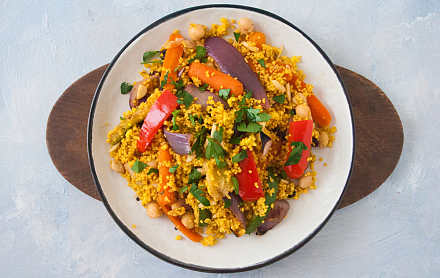
Couscous

Couscous

A traditional dish made from steamed semolina wheat, often served with a flavorful stew of lamb, chicken, or vegetables, seasoned with spices like cumin, coriander, and saffron.

Brik

Brik

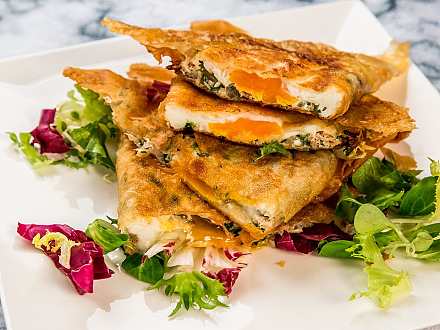
A popular snack made with thin pastry (similar to phyllo dough) filled with egg, tuna, capers, and parsley, then deep-fried until crispy, typically served as an appetizer.

Lablabi

Lablabi

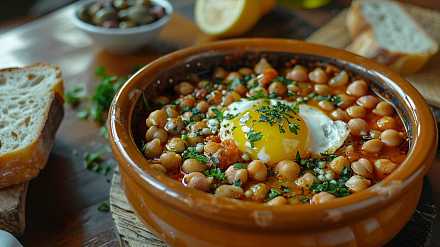
A hearty chickpea soup spiced with cumin, garlic, and olive oil, often served with bread, olives, and a drizzle of harissa (spicy chili paste), making it a perfect comfort food.

Mechoui

Mechoui

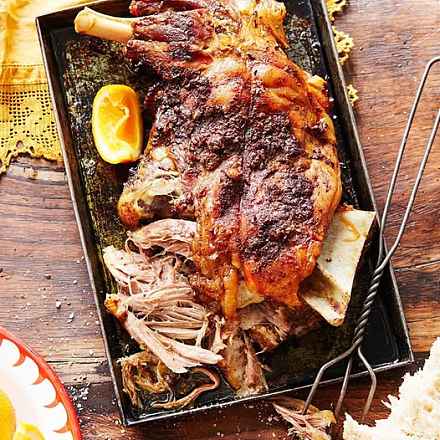
A dish of slow-roasted lamb, typically cooked in a pit, flavored with garlic, cumin, and olive oil, and served with flatbread or vegetables, often enjoyed during special occasions.

Tunisian Salad

Tunisian Salad

A grilled vegetable salad made from tomatoes, peppers, onions, and garlic, all mashed together and drizzled with olive oil, lemon juice, and a sprinkle of cumin.

Harissa

Harissa

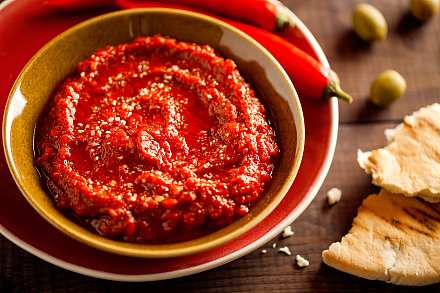
A spicy chili paste made from ground red peppers, garlic, olive oil, and spices, commonly used as a condiment or cooking ingredient, adding a fiery kick to many dishes.

Makroud

Makroud

A sweet semolina cake filled with dates or almonds, fried until golden, and soaked in honey, commonly served during celebrations or special occasions.

Tunisian Tagine

Tunisian Tagine

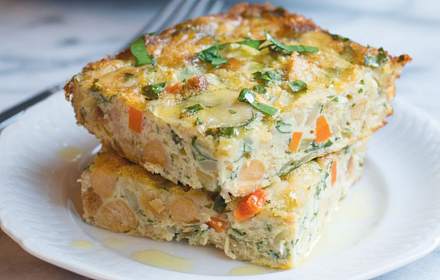
A savory, casserole-like dish made with eggs, vegetables, and meat (usually lamb or chicken), mixed with spices like cinnamon, ginger, and saffron, and baked in a round clay dish.

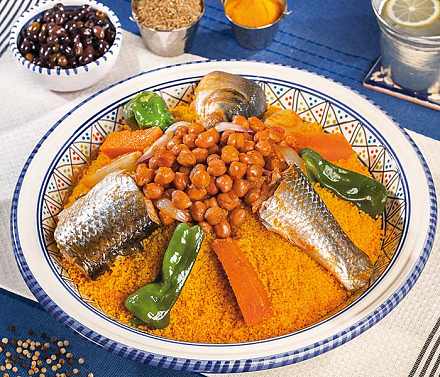
Couscous with Fish

Couscous with Fish

A coastal variation of couscous, where semolina is steamed and served with a fish stew, typically made with sardines, tomatoes, and spices.

Tunisian Mint Tea

Tunisian Mint Tea

A refreshing beverage made with green tea, fresh mint, and sugar, served in small glasses, and often enjoyed after meals or during social gatherings.

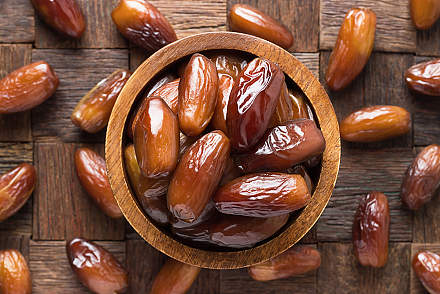
Dattes

Dattes

Tunisia is known for its high-quality dates, which are often eaten as a snack or dessert, sometimes paired with almonds or drizzled with honey.

Packing

When packing for a trip to Tunisia, think light and breathable clothing for the hot, dry climate, but also consider modest attire to respect local customs, especially when visiting religious sites. A light jacket or sweater is useful for cooler evenings. Don't forget your swimwear for the beautiful Mediterranean beaches, and a good pair of walking shoes for exploring historical sites. Sunscreen, sunglasses and a hat are essential to protect against the strong sun. If you plan on exploring the Sahara, pack a scarf or bandana to protect against sand.

Currency

The official currency of Tunisia is the Tunisian Dinar (TND), which is divided into 1000 millimes. Coins come in denominations of 5, 10, 20, 50, 100, 200 millimes, and 1 and 5 Dinars. Banknotes are available in 10, 20, 30, 50, and 100 Dinars. ATMs are widely available in cities and larger towns and most of them accept international cards. However, it's always a good idea to carry some cash, especially when visiting smaller towns or rural areas where ATM access may be limited. Credit cards are generally accepted in hotels, restaurants, and larger shops, particularly in tourist areas. But smaller businesses and market stalls often prefer cash. It's important to note that due to currency restrictions, you cannot buy or sell Tunisian Dinars outside of Tunisia, so remember to exchange any leftover currency before leaving the country.

Transport

Tunisia's main international gateway is Tunis-Carthage International Airport, located near the capital city Tunis. Other significant airports include Djerba-Zarzis International Airport and Monastir Habib Bourguiba International Airport, serving popular tourist destinations. For in-country travel, Tunisia has a comprehensive transportation system. Trains operated by SNCFT offer an economical way to travel between major cities, while louages (shared taxis) and buses provide flexible options for shorter distances and more remote areas. Taxis are also readily available and quite affordable. In larger cities like Tunis, the light metro system is a convenient option.

Emergency

It's important to dress modestly, particularly when visiting religious sites. Public displays of affection between unmarried individuals are considered inappropriate. While Tunisia is more liberal than some of its neighbors, it's still a predominantly Muslim country, so respect for Islamic customs is appreciated. Avoid discussing sensitive topics like politics and religion. During the holy month of Ramadan, eating, drinking, or smoking in public during daylight hours can be seen as disrespectful. In case of emergencies, the general emergency number in Tunisia is 112 for the police and 190 for ambulance services.

Power Sockets

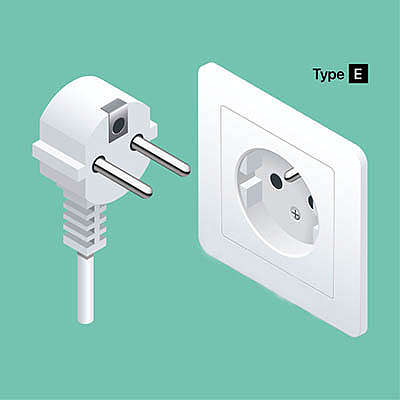
Tunisia operates on a 230V supply voltage and 50Hz. The country uses Type C and Type E power sockets. Type C is the plug with two round pins and Type E is the plug with two round pins and a hole for the socket's male grounding pin.

Socket sample 1Socket sample 2

Tours

View all tours

No featured routes yet

Route recommendations for this destination are coming soon.

Tour operators

View all operators