Is the Grand Egyptian Museum Worth a Dedicated Trip?
Twenty years of construction. Roughly 47 hectares on the edge of the Giza plateau. An inauguration attended by 79 delegations, including 39 heads of state and government, with the pyramids lit up behind the stage. The Grand Egyptian Museum opened to the public on 4 November 2025, three days after the ceremony, and the claim attached to it is deliberately precise: the largest museum in the world dedicated to a single civilisation.
For anyone who has already stood under the Pyramids and walked the colonnades at Luxor, the interesting question is not whether the building is impressive. It is whether the museum earns a half day, an extra night in Cairo, or in the most extreme case a second flight to Egypt. The short answer is that it earns the half day and does not earn the flight.
What Twenty Years and a Billion Dollars Actually Bought
The museum sits about 2 km from the Giza pyramids and roughly 5 km southwest of central Cairo, close enough that the pyramid of Khafre is framed by the glass wall at the top of the Grand Staircase. Construction started in the mid-2000s and slipped repeatedly through funding problems, political upheaval and the pandemic before the November 2025 opening.
The numbers behind the scale claim are consistent across official statements: more than 100,000 objects in the collection, twelve main galleries arranged chronologically from prehistory to the Roman period, and about 500,000 square metres of site. The careful phrasing matters. GEM is described as the largest museum devoted to one civilisation, not the largest museum on earth. That distinction tells you what to expect: depth in a single subject rather than breadth across many.
The Tutankhamun galleries justify the ticket on their own
Everything else in the building is context for this. For the first time, the full funerary assemblage of Tutankhamun is displayed together in one place. Egyptian state media puts the figure at 5,992 pieces; the museum's own guided-tour description refers to more than 5,000 artifacts from the tomb, including the gold mask that spent decades at Tahrir and moved to Giza in 2025.
In practice the Tutankhamun rooms are where your schedule dissolves. Give them at least 45 minutes and expect a cluster of phones around the mask at any hour of the day.
The second anchor is the Khufu solar boat, roughly 43 metres long, about 20 tonnes and some 4,500 years old, housed in its own hall with a spiral ramp that lets you look down on the hull from above. The third is the atrium itself, where the 11-metre colossus of Ramses II, 83 tonnes of red granite, stands at the point where you enter. Between them, the Grand Staircase carries dozens of large statues, stelae and columns; the museum's own tour description counts 59 pieces along the ascent.
Where the scale starts working against you
Nothing here is a five-minute stop. The walk from the entrance through the chronological galleries, up the staircase and into Tutankhamun is a genuine distance. Museum staff and outside guides converge on three to four hours as a minimum and half a day as comfortable. That is the honest cost of the place, and it is the number to build your day around.
The compensation is that the entire visit is indoors and air-conditioned, which on a hot Cairo afternoon matters more than most travellers expect.
Tickets, Timed Entry and the Hours That Work
Prices have moved and will move again. Foreign adults currently pay EGP 1,590, roughly USD 33 at the time of writing. From 1 November 2026 that rises to EGP 1,830, around USD 38, with the foreign child and student rate going from EGP 800 to EGP 920. Children under six enter free, as do visitors with disabilities, ICOM members and Egyptian licensed guides accompanying a group. Foreign residents in Egypt pay roughly half the non-resident rate, and Egyptian nationals pay a fraction of it.
Whether that is expensive depends on the comparison. It is more than the old Tahrir museum, more than most European national collections, and less than a private guide for a day. In exchange you get the only place on earth where the Tutankhamun material exists as one complete collection.
Book on the official site, and only the official site
Entry is timed and effectively digital. Advance booking was introduced in mid-November 2025 to regulate visitor flow, and the Egyptian government has stated repeatedly that visit-gem.com is the only authorised ticketing platform. One counterfeit site was shut down in December 2025 and three more were flagged afterwards, so the scam market around this museum is real. An upgraded booking system launched in April 2026.
In high season, October through April, several operators advise booking two to three weeks ahead because the popular morning slots sell out. Arriving without a ticket in a peak week usually means spending your morning in a queue instead of in a gallery.
Opening hours and the slots worth aiming for
On ordinary days the complex opens at 8:30 and closes at 19:00, with galleries running from 9:00 to 18:00 and the last ticket sold at 17:00. Saturdays and Wednesdays are extended, with the complex open until 22:00 and the galleries until 21:00.
Crowd data is public and sobering. About 18,000 people came through on the first public day, and the museum's director has described a working target of 15,000 to 20,000 visitors daily with an annual projection of around seven million. The 9:00 opening slot and the late Saturday or Wednesday evenings are the two windows when the Tutankhamun rooms feel like a museum rather than a terminal.
Worth knowing before you book: a two-hour guided highlights tour covers the Grand Hall, the Grand Staircase, the twelve galleries and Tutankhamun, which is the sensible option if your Cairo time is tight. A sunrise tour runs 6:30 to 8:30 with advance booking required. A 15-minute mixed-reality experience on how the pyramids were built is available for over-sixes only. The children's museum runs 10:00 to 17:00. Inside the complex there are gardens, plazas, cafés, restaurants and shops, so you do not need to leave for lunch.
Phone photography is permitted, with restrictions in some areas including parts of the Tutankhamun galleries. Tripods, selfie sticks and outside food and drink are not.
GEM or the Old Egyptian Museum in Tahrir
This is the decision repeat visitors get wrong. The two museums are not duplicates and not rivals, but in 2026 they are no longer equals.
The Tahrir museum opened in 1902 and covers about 17,000 square metres, roughly 7 percent of the GEM footprint. It still displays around 50,000 objects from a stored collection of some 165,000, with real strength in Amarna art, predynastic material and the Yuya and Tuya treasure. What it no longer holds is the Tutankhamun collection.
One clarification that catches people out: the royal mummies are at neither museum. They are at the National Museum of Egyptian Civilization in Fustat, which is a third site and a separate half day.
If you have time for exactly one museum in Cairo, it is the Grand Egyptian Museum, without much debate. Add Tahrir only if you have a spare half day, care about the 1902 building's old-fashioned atmosphere, or want the Amarna rooms. Attempting both on the same day produces two rushed visits and no good photographs.
Pairing the Museum With the Pyramids
The geography makes this easy; the logistics make it harder than it looks. The two sites are about 2 km apart, a five to ten minute drive, and 30 to 45 minutes from downtown Cairo hotels depending on traffic.
The sequence that works for most people is pyramids first, museum second. The plateau is open desert with almost no shade, so a 7:30 or 8:00 start buys cooler air, cleaner light and thinner crowds at the Sphinx. Three hours there, lunch, then the museum from about 13:00.
The reverse order suits anyone who wants the galleries quiet at 9:00 and can handle the plateau in the afternoon heat, though pyramid ticket windows close mid-afternoon and the site shuts in the late afternoon.
The best version of this day, when your dates allow it, is a Saturday or a Wednesday. Pyramids in the morning, a long lunch, then the museum from 16:30 until the 21:00 close, when the Grand Staircase empties out and the glass wall goes dark behind Khafre's pyramid.
Anchor the day on your timed museum slot and build around it, not the other way around. Independent travellers should budget for a private car or ride-hailing app between the plateau and the museum, since the walk between them is not pleasant in heat and the taxi negotiations at the pyramid exits are their own experience.
Who Should Give It a Miss
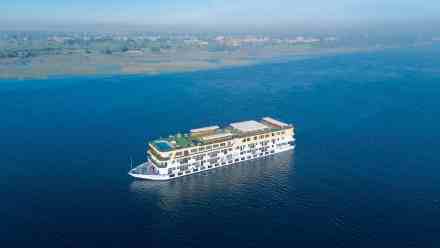
Travellers with very young children will find the distances punishing, even though under-sixes enter free and the children's museum helps break up the day. Anyone with close to zero interest in antiquities should be honest about paying EGP 1,830 to look at a building, however good the building is. If Cairo is a single transit day on a Red Sea or Nile cruise itinerary, the museum needs three to four hours you probably do not have; the two-hour guided highlights tour is the compromise that saves the visit.
The travellers who should absolutely go are the ones who saw the old Tutankhamun room at Tahrir years ago and remember the crush around a single case. This is that experience, rebuilt at the scale it always deserved.
The Verdict
The Grand Egyptian Museum is a main course, not an optional side. It is not, on its own, a reason to book a flight to Egypt, and anyone insisting otherwise is selling something. Treat it as the anchor of a Cairo day, pair it with the plateau two kilometres away, and the twenty-year wait starts to look like reasonable value.
Book ahead on the official platform, take the 9:00 slot or a late Saturday or Wednesday evening, budget half a day, and save the Tutankhamun galleries for last, when your legs are tired but your attention has been warmed up by everything that came before.
If you are building a Cairo leg around the museum and the pyramids and want the timing, transport and guiding handled by people who run this route every week, FindTourGuide connects travellers with local tour operators; you can submit a trip request for free and receive multiple itinerary options and quotes.