
- Black River Gorges National Park- Travel TipsWhat to See, How to Plan & Tours
- Natural Scenery
- 5 Reviews
Exploring the Wild Heart of Black River Gorges National Park
Black River Gorges National Park protects 6,574 hectares of the island's last remaining native forest, a vital sanctuary established on June 15, 1994, to prevent the total loss of Mauritian biodiversity. Entry to the park is free for all visitors, offering access to over 60 kilometers of maintained trails that cut through high-altitude heathland and deep river valleys. Unlike the manicured botanical gardens found elsewhere, this is a rugged wilderness where the elevation spans from 150 meters in the lowland gorges to the 828-meter summit of the island's highest peak.
Choosing the correct entrance depends entirely on your fitness level and what you want to see. The Petrin Information Centre sits on the central plateau at roughly 600 meters, making it the ideal starting point for those who prefer flatter walks or birdwatching along the highland marshes. In contrast, the Black River Visitor Centre on the western coast requires hikers to tackle significant vertical climbs to reach the major viewpoints. If you are looking for a casual afternoon, I recommend sticking to the eastern plateaus where the air is noticeably cooler—often five degrees lower than the coastal heat.
Strategizing Your Entry Points and Trail Logistics
The Upland Advantage of Petrin Information Centre
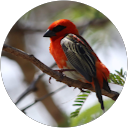
Accessing the park from the Petrin side via the B102 road provides immediate entry into the upland moist forest. This area is characterized by a unique marshy heathland where a boardwalk allows you to observe rare dwarf vegetation without getting your boots muddy. From here, the Macchabee Forest Loop is a manageable 10-kilometer circuit that stays relatively level while winding through old-growth ebony trees. Most visitors overlook the smaller side paths here, but these often lead to quieter clearings where the endemic Echo Parakeet is more likely to be spotted feeding on native fruits.
The Ascent from Black River Visitor Centre
Starting at the coastal entrance near the Black River Gorges Road offers a completely different ecosystem of drier lowland forest. This is the staging ground for the Mare aux Joncs trail, a 4-kilometer trek that leads to a hidden waterfall deep in the canyon. Be prepared for a physical challenge; the humidity is higher here, and the terrain involves navigating basalt boulders and crossing small streams that can swell rapidly after a tropical downpour. Experienced hikers often use this route to connect with the Macchabee Trail, creating a strenuous cross-island trek that requires a pre-arranged taxi at the opposite end.
Reaching the Summit of Piton de la Petite Rivière Noire
Standing as the highest point in Mauritius at 828 meters, the Piton de la Petite Rivière Noire hike is the park's most iconic achievement. The trail begins near the Gorges Viewpoint on the Plaine Champagne road and covers about 7 kilometers for a round trip. While the first 90% of the path is a relatively gentle stroll along a forested ridge, the final stretch is a technical scramble. A heavy chain is fixed to the rock to help hikers navigate the steep, often slippery clay incline leading to the summit. Once at the top, look for the colorful bench marked 828, which provides a panoramic view of the Le Morne Brabant peninsula and the turquoise lagoons of the west coast.
Endemic Wildlife and Seasonal Natural Cycles
Sanctuaries for the World’s Rarest Birds
The park is the only place on Earth where you can see all nine of the island's endemic bird species in a single afternoon. Conservation efforts here saved the Mauritius Kestrel from a population of just four individuals in the 1970s; today, these small raptors are frequently seen hovering over the gorge in search of geckos. The Pink Pigeon, once equally rare, is often found near the field stations where Mauritian Wildlife Foundation staff monitor their progress. I find that bringing a pair of binoculars is non-negotiable here—the Echo Parakeets are vivid green and blend perfectly into the canopy, making them nearly invisible to the naked eye.
The Ritual of the Goyave de Chine Season
Between April and June, the park transforms during the Chinese Guava season, known locally as Goyave de Chine. While these are technically invasive shrubs that crowd out native flora, the picking of their small red and yellow fruits is a deep-seated Mauritian tradition. During these months, you will see local families heading into the woods with buckets to gather the harvest. The red variety is tart and high in vitamin C, while the yellow ones are significantly sweeter. If you visit during this window, I suggest joining the locals near the Alexandra Falls parking lot, but stay on the marked paths to avoid damaging the delicate orchids and ferns that grow beneath the guava canopy.
Frequently Asked Questions
What is the entrance fee for Black River Gorges National Park?
Entrance to the park is entirely free of charge for both residents and international tourists. You do not need to book a permit for day hiking, though you should register your name and intended trail at one of the visitor centers for safety purposes. Maps are typically available at the information desks for a small nominal fee or can be photographed on the display boards for free.
Which entrance is best for seeing the waterfalls?
The Alexandra Falls viewpoint on the Plaine Champagne road is the most accessible spot to see a major cascade without a long hike. For those who prefer a more immersive experience, the Mare aux Joncs trail from the Black River entrance leads directly to the base of a 50-meter waterfall. This trek takes approximately 2.5 to 3 hours round trip and requires crossing a river, so it is best attempted in dry weather.
Is it necessary to hire a guide for the park trails?
Most trails are well-marked with color-coded signs and are safe to navigate solo if you stay on the official paths. However, a local guide is highly recommended if your primary goal is birdwatching or identifying rare endemic trees like the Bois de Natte. For the technical final ascent of Piton de la Petite Rivière Noire, a guide can provide extra confidence, especially if the trail is slick after recent rain.
When is the best time of day to visit for wildlife spotting?
Early morning between 7:00 AM and 9:00 AM is the peak time for bird activity as the forest begins to warm up. You will also avoid the midday heat, which can make the lowland trails quite exhausting. If you are specifically looking for the Mauritian flying fox, these giant fruit bats are most active around sunset, but they can often be seen soaring over the deeper gorges throughout the day.
Are there facilities like food and water available inside the park?
You will not find any shops or restaurants inside the national park boundaries, so it is vital to carry at least two liters of water per person. Basic toilet facilities are available at the Petrin and Black River Visitor Centers and the Alexandra Falls viewpoint. I suggest stopping in the nearby village of Chamarel or the town of Curepipe to buy snacks and supplies before heading to the park entrances.
Attractions in Mauritius
- 1
- 2
- 3
- 4
- 5
Reviews of Black River Gorges National Park
 Krish N
 - 5
Black River Gorges doesn’t need a review😂 It is nature in all its beauty. But I think all mauritian, of course if your health permits you, should go atleast once, even if not far in the woods. If you are coming to Mauritius, make it a must to go for a hike or even small walk there on a good weather day. You will have no regrets.
 peter hough
 - 5
It’s free! Beautiful views, clearly marked trails, safe spots for swimming and easy to find
 Manisha Patel
 - 5
Such an amazing viewpoint. Parking just outside and you have to walk three minutes to get to the viewpoint. Well worth it. Not crowded at all on the day we went
 Alex S
 - 5
The Black River George National Park is the only one in Mauritius and was proclaimed as such in 1994. It extends in the southwestern part of the island with an area of 6,754 hectares, which corresponds to around 3.5% of the total land area of Mauritius. Black River George National Park is home to a large number of endemic flora and fauna. It is one of the rarest forests in the world.
 Mark O'Donoghue
 - 5
Great views and a really good hike to the top of a summit. Says it is a 4 hour hike, but more like 3 if you're averagely fit and don't spend ages at the view points (3). Last section just below peak is pulling yourself up on ropes but is not technical, the ropes are there for safety and assistance (would be tough to get up one section without them mind!)




