Mount Meru - Attraction Guide
Mount Meru
Planning a trip to Tanzania/Arusha/Mount Meru?
Share your travel plans and get free itineraries and quotes from multiple trusted local operators.
10k+ travelers have submitted inquiries
Essential Guide to Climbing Mount Meru in Arusha National Park
Mount Meru reaches an elevation of 4,566 meters (14,980 feet) and stands as the centerpiece of Arusha National Park in northern Tanzania. While often overshadowed by its neighbor Kilimanjaro, this active stratovolcano offers a more concentrated technical challenge and superior wildlife encounters. Entry to the park for non-residents currently costs approximately 59 USD per day, excluding hut fees, rescue fees, and guide costs. The mountain remains active, though its last minor eruption occurred in 1910, leaving behind a massive horseshoe-shaped crater that defines the dramatic eastern face.
Want to visit Mount Meru?
Compare 5 quality local operators, get custom itinerary and exclusive quotes
Terrain Dynamics and the Momella Route
Geological History and Crater Structure
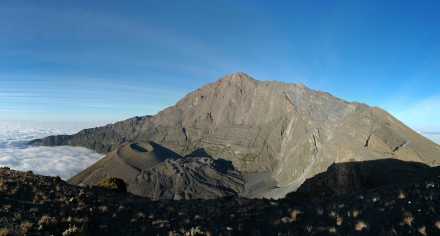
The most striking feature of Mount Meru is the massive breach in its eastern wall, caused by a catastrophic collapse roughly 7,800 years ago. This event removed a significant portion of the mountain's original height and created the spectacular ash cone that sits on the crater floor today. Hikers ascending the Momella Route—the only permitted path to the summit—experience a literal walk through geological time as they move from the lush forest floor to the volcanic scree of the higher reaches. The lower slopes are characterized by a mosaic of montane forest and open glades, where the soil is exceptionally fertile due to ancient volcanic deposits.
The Knife Edge and Technical Scrambling
Unlike the relatively straightforward walking paths found on many Kilimanjaro routes, the final push to Socialist Peak (the official name of the summit) involves genuine scrambling. The section known as the Knife Edge requires hikers to navigate a narrow volcanic ridge with significant drops on either side. It is not for those with severe vertigo, but the rock is generally firm and provides good handholds. High winds often whip across this ridge during the pre-dawn summit push, making trekking poles nearly a liability in certain gusty sections where staying low to the center of the ridge is safer. The physical sensation of the narrow path underfoot—often just a meter wide in places—creates a psychological intensity that larger mountains frequently lack.
Practical Logistics for the Ascent
Mandatory Ranger Escorts and Wildlife
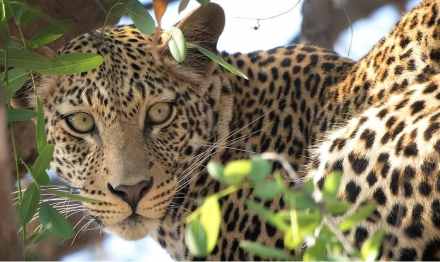
Because Arusha National Park is home to high densities of buffalo, elephants, and leopards, the Tanzania National Parks Authority (TANAPA) mandates that an armed ranger accompany every trekking group on the lower slopes. This requirement typically applies until hikers reach the higher, more exposed sections above the forest line where large mammals are less common. I find that these rangers often provide more practical insight into the mountain's ecosystem than standard mountain guides. Seeing a herd of Cape Buffalo at 2,500 meters while you are on foot is a humbling experience that highlights the wild nature of this specific trek compared to the more sterile environments of higher-altitude peaks.
Hut Accommodations and Capacity
Camping is not permitted on the standard Momella Route; instead, trekkers stay in large, communal wooden huts. Miriakamba Hut sits at 2,514 meters and serves as the first overnight stop, offering views back toward the Momella Lakes. The second stop is Saddle Hut, located at 3,570 meters in the saddle between the main peak and Little Meru. These huts are basic, equipped with bunk beds and mattresses, but they are significantly warmer and drier than tents. Saddle Hut can accommodate roughly 35 to 40 people, and during the peak months of July and August, it often reaches full capacity. Booking well in advance through a licensed operator is the only way to guarantee a bed in these structures.
Seasonal Weather and Timing
The dry season from late June to October is the most reliable window for a successful summit, as the volcanic ash and scree on the upper sections become dangerously slippery when wet. A second shorter dry window exists from December to February. Clear mornings are frequent, but clouds usually roll in by mid-afternoon, often obscuring the spectacular view of Kilimanjaro which sits roughly 70 kilometers to the east. Temperatures at the summit frequently drop to -5 or -10 degrees Celsius before dawn, even if the Arusha plains below are experiencing 25-degree heat. I suggest timing your arrival at the summit for exactly sunrise, as the shadow of Mount Meru is cast perfectly onto the clouds toward the west, a phenomenon that lasts only about twenty minutes.
Acclimatization and Fitness Requirements
Physical Conditioning for Steep Gradients
While Meru is lower than Kilimanjaro, the daily elevation gain is much steeper. On the second day of the climb, you ascend over 1,000 meters in a relatively short horizontal distance. This puts significant strain on the quadriceps and knees during the descent. Training should focus on high-repetition weighted lunges and stair climbing rather than just flat-surface running. The descent from the summit back down to Momella Gate is often done in a single day, which involves a massive 3,000-meter drop in elevation that can be punishing for anyone with pre-existing joint issues.
Using Meru as a Warm-up Peak
Many climbers use a four-day Meru trek to acclimatize before attempting the five or six-day routes on Kilimanjaro. This is a highly effective strategy because it allows your body to adjust to the 4,500-meter mark in a more controlled, lower-stakes environment. However, treating Meru as a mere training run is a mistake. It is a standalone world-class climb that is objectively more beautiful in its varied vegetation than the higher reaches of its neighbor. The proximity of the ash cone and the sheer verticality of the inner crater walls provide a sense of scale that is unique to this specific volcanic structure.
Want to visit Mount Meru?
Compare 5 quality local operators, get custom itinerary and exclusive quotes
Frequently Asked Questions
Is a ranger mandatory for all Mount Meru climbs?
Yes, TANAPA regulations require an armed ranger for the first portions of the trek due to the presence of buffalo and elephants. This ranger is separate from your mountain guide and is provided by the park authorities at the Momella Gate.
How long does the standard Mount Meru trek take?
The trek is usually completed in either three or four days. The four-day option is highly recommended as it allows for a shorter second day and an afternoon ascent of Little Meru (3,820m) for better acclimatization before the midnight summit push.
What are the current park fees for Arusha National Park?
Entry fees for non-resident adults are currently 59 USD per person per 24-hour period. Additional costs include hut fees of approximately 35.40 USD per night and a mandatory rescue fee of 23.60 USD per trip, though these are typically bundled into tour operator pricing.
Can you see Kilimanjaro from the summit of Mount Meru?
Kilimanjaro is clearly visible from the summit and the eastern ridge of Mount Meru on clear days. The view is most consistent at sunrise when the air is still and the morning light hits the glaciers of Kibo directly across the plains.
Do I need technical climbing gear like ropes or ice axes?
No technical climbing gear is required for the standard Momella Route, though the ridge section involves light scrambling where you will use your hands for balance. Heavy-duty trekking boots with good ankle support and high-quality trekking poles are the most essential pieces of equipment.
Mount Meru |Tours
View All Tours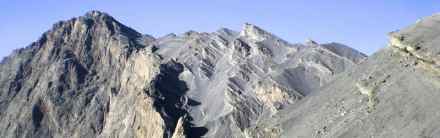
3-Day Private Mount Meru Hiking Tour

7–9 Day Tanzania Tour: 4-Day Mount Meru Trek, 3-Day Serengeti Park & Ngorongoro Crater

4-Day Best Walking & Trekking Mount Meru Tours

4 Days Climb Mount Meru

— All loaded —
Tanzania |Operators
View All Operators





Arusha |Attractions
View on MapMount Meru |Reviews

The toughest in the East African region. Meru is overly underestimated. This beauty is a thrill and a very challenging one. TANAPA have done really well with good camps. Beds, dining area and washrooms which are very well maintained.

A great warm-up before the Kilimanjaro! We did the three-night and four-day hike. The park ranger was awesome and took us through a walk-in Safri :)

Viewing Mount Meru from the near village know as Shangarai. Where you will always enjoy water fall from the mountain and beautifully green land

I absolutely loved this hike. I have explored quite a number of mountains in Uganda, Rwanda and DRC; but haven't experienced such a spectacular thrill like I did at Tanzania's Mount Meru. The dining area, sleeping and toilet facilities are quite impressive. Tanzania has done well. Hongera, TANAPA!

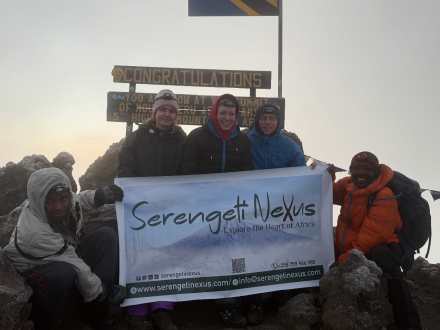
Very tough to hike, when we were on the way we enjoyed the animals, the summit day was real tough and the PEAK of its doesn't support a lot of people to gather there for the group photos, rather by shifts
— All reviews loaded —