Kenya Ebola Travel: Is It Safe to Visit in 2026?
Kenya's Ebola story changed on 6 October 2026, when the Ministry of Health confirmed the country's first imported case of Bundibugyo virus disease. By 17 October, the ministry had confirmed seven cases in total, including the first patient who died. For a traveler with a safari booked, a Nairobi connection, or a Diani beach stay, the question is no longer abstract. It is practical: do I go, what do I need to check, and what would make me change my plan?
The short answer is that Kenya has not been placed under WHO travel restrictions, its borders remain open, and the confirmed cluster is linked to one imported case and its contacts in Nairobi. The practical answer is more nuanced. Your risk depends on where you go, how you interact with health facilities, and whether you have a plan for symptoms. This is a decision guide, not a reassurance poster.
What has actually changed in Kenya
The confirmed cluster
On 17 October 2026, Kenya's Ministry of Health confirmed four new cases of Bundibugyo virus disease, bringing the total to seven, including the first patient who died. The four new cases include a close male relative of the deceased and three health workers who attended the index patient in hospital. The health workers were two men and one woman, aged 29, 35 and 32. They had treated the first patient between 3 and 4 October and had been in quarantine since 9 October. The male relative had been in quarantine since 6 October. All four developed fever and were isolated before testing positive.
The first patient was a Kenyan who had lived in the Democratic Republic of Congo for seven years. He became ill about a month before returning, received treatment at several hospitals in Congo, traveled by road to Kampala, and then flew on Jambojet flight JM 8523 to Nairobi on 3 October, arriving at Jomo Kenyatta International Airport at 1:10 pm. He passed entry health screening there, was taken to Nairobi Hospital, and was isolated in the hospital's East Wing. He died on the night of 5 October. It was the first Ebola case ever recorded in Kenya.
Before the 17 October update, Kenya had confirmed a 39-year-old male family member on 14 October and a 65-year-old female relative on 16 October. Both had already been in quarantine when they fell ill. Officials said nearly all listed contacts had been traced and quarantined, but new cases among quarantined contacts remain possible until the 21-day monitoring period ends.
What officials are saying about public risk
Kenya's Ministry of Health and WHO have said there is no evidence that the virus is spreading in the wider community. WHO has advised against travel and trade restrictions for Kenya, the DRC and Uganda. Kenya has not closed its borders. The government has, however, declared Ebola a formidable epidemic disease and gazetted new public health rules covering screening, disease reporting, quarantine, safe burial and penalties for non-compliance. That means more visible health checks and legal obligations, not a tourism shutdown.
The phrase to hold on to is "no evidence of community spread." It is not the same as a guarantee of zero risk. The next 21-day monitoring window matters. Travelers should check the date on every advisory, not just the headline. A statement from 6 October may be out of date by 17 October.
How travelers should assess risk by itinerary
Nairobi and transit
Most confirmed cases are linked to Nairobi Hospital, the index patient's family contacts, and quarantine facilities. They are not linked to tourist hotels, restaurants, national parks or the airport's public arrivals hall. If your itinerary is a JKIA transit, a night in Nairobi, or visits to the Giraffe Centre, Nairobi National Park or the David Sheldrick Wildlife Trust, the ordinary tourist risk remains low. The one sensible adjustment is to avoid visiting hospitals or quarantine facilities unless you need urgent medical care. If you have a routine medical appointment, call ahead and use a reputable facility.
Airport screening can add time, especially for passengers arriving from the DRC, Uganda, Tanzania, Rwanda, Burundi, Angola, Zambia, Ethiopia, South Sudan and the Central African Republic. Kenya has placed travelers from those ten countries under enhanced screening at JKIA. Other arrivals may still face temperature checks or health questions. Allow extra time for connections, and do not book a tight self-transfer between an international arrival and a domestic safari flight.
Safari circuits and the coast
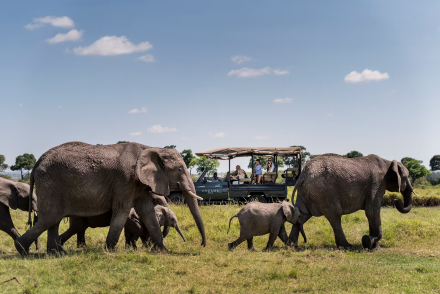
Nothing in the official updates places the Maasai Mara, Amboseli, Tsavo, Laikipia, Samburu, Lewa, Diani, Watamu, Lamu or Mombasa inside the known transmission chain. These areas are far from the Nairobi hospital cluster. Safari is an outdoor, low-density activity, and it is not a high-risk setting for Ebola. The bigger health risks on safari remain malaria, road safety, dehydration and stomach illness.
If you are on a group tour, ask your operator about vehicle hygiene, hand-washing, and what happens if a guest develops a fever. For a coast trip, the same logic applies. Ebola is not spread by seawater, swimming pools, mosquitoes or normal tourist contact. It spreads through direct contact with the blood or body fluids of someone who is already symptomatic, or with contaminated surfaces and materials. That distinction matters. You do not need to cancel a beach trip because of headlines. You do need to avoid casual contact with visibly ill people and seek help quickly if you develop fever.
Entry rules, screening and insurance
Airport and land border screening
Kenya has enhanced screening at JKIA and at land border crossings, including Malaba. By early October, the Ministry of Health said more than 652,000 travelers had been screened and 267 samples tested through the national laboratory network. Screening may include temperature checks, health questionnaires and secondary assessment if you have a fever or relevant symptoms. A health check is not a visa interview. Answer questions honestly. If you have a fever, do not take fever-reducing medicine just to pass screening. That can delay your own diagnosis and create a public health problem.
Land borders remain open. Kenya's health minister ruled out closing borders, saying closures push people toward unofficial crossing points where screening is weaker. For travelers, the practical impact is time and paperwork, not a sealed border.
eTA insurance and documents
From 6 October 2026, international visitors applying for Kenya's electronic travel authorisation are required to purchase visitor health insurance through the eTA system. The current cost is about US$44 plus a payment gateway fee. This is separate from your normal travel insurance. Check the official eTA portal before you apply, because the requirement is new enough that some travelers and even some booking agents may not know it.
Keep digital and printed copies of your eTA, insurance certificate, passport, return ticket and itinerary. If you rely on private travel insurance for medical evacuation, confirm that it covers Kenya and that it includes Ebola or viral hemorrhagic fever. Many standard policies exclude epidemics. Ask specifically about evacuation to Nairobi or abroad. This is the same due diligence you would do for a remote safari camp, not an overreaction to the news.
Health precautions, contingency planning and trip decisions
Before departure
Check four sources before you fly: the Kenya Ministry of Health, WHO Afro, CDC Travelers' Health and your own foreign ministry. Save screenshots with dates. Tell your accommodation or tour operator if you have a fever before arrival. Pack hand sanitizer, a basic thermometer, oral rehydration salts and a small first-aid kit. Routine travel vaccines for Kenya, such as yellow fever if required by your route, typhoid, hepatitis A and tetanus, should be discussed with a travel clinic. Ebola is not a standard tourist vaccine, and this Bundibugyo outbreak is being managed through contact tracing and infection control. Do not expect a vaccine to replace basic hygiene.
If symptoms appear
Ebola symptoms include fever, chills, fatigue, muscle pain, sore throat and, in later stages, bleeding. They can look like malaria, flu or COVID-19. If you develop fever within 21 days of being in Kenya, call a medical provider before walking into a clinic. Tell them your travel history and any contact with a known case. Avoid crowded waiting rooms. Use a mask if you have respiratory symptoms. Do not self-medicate with antibiotics. Malaria is far more common in Kenya and needs urgent testing.
If you are on safari, your camp should have a medical evacuation plan. Confirm the response time and the nearest airstrip before you book. For remote camps in the Maasai Mara or Tsavo, a serious fever is a logistics problem as much as a medical one. Good operators plan for it.
When to postpone or reroute
If you are healthy, have no contact with a known case and are heading to a safari lodge or coast resort, there is no official reason to cancel. If you are immunocompromised, pregnant, or traveling specifically to visit a hospital or quarantine area, reconsider. If you are a health worker hoping to volunteer, do not self-deploy. Work through official channels. If you have a fever or recent contact with a confirmed case, do not travel. That is the clearest red line.
For everyone else, the decision is about tolerance for uncertainty. The 21 days after the last known exposure will show whether this cluster is contained. Book flexible cancellation where possible. Use a local operator who can reroute around a health facility or adjust a Nairobi stop. That is more useful than a generic "Is Kenya safe?" answer.
If you are planning a Kenya safari or coast trip and want an operator who can build in flexible routing, health contingencies and current local advice, FindTourGuide lets you submit a trip request for free and receive itinerary options and quotes from local tour operators.