Lake Bogoria National Reserve - Attraction Guide
Lake Bogoria National Reserve
Planning a trip to Kenya/Lake Bogoria?
Share your travel plans and get free itineraries and quotes from multiple trusted local operators.
10k+ travelers have submitted inquiries
Exploring the Geysers and Flamingos of Lake Bogoria
Lake Bogoria National Reserve spans 107 square kilometers in Kenya's Baringo County and functions as one of the most active geothermal sites in the Great Rift Valley. This saline lake is primarily known for its massive colonies of lesser flamingos and its collection of over 20 explosive geysers. Positioned at an elevation of roughly 990 meters above sea level, the reserve provides a much hotter and more arid environment than its neighbor, Lake Nakuru. Visitors typically pay an entry fee of 50 USD for non-resident adults, although these rates are managed by the Baringo County government rather than the Kenya Wildlife Service and can change without notice. The lake itself is relatively shallow, reaching depths of only about 10 meters, yet it supports a dense population of cyanobacteria that serves as the primary diet for the avian visitors.
Want to visit Lake Bogoria?
Compare 5 quality local operators, get custom itinerary and exclusive quotes
Geothermal Activity and the Loburu Hot Springs
The western shore of the lake houses the Loburu hot springs, a collection of at least ten geysers that erupt periodically to heights of up to five meters. These springs are the result of deep-seated volcanic activity where groundwater meets superheated rocks before being forced back to the surface under intense pressure. The water emerging from these vents frequently exceeds 100 degrees Celsius, which is hot enough to boil an egg in less than ten minutes. Most visitors carry a small mesh bag of eggs to test this natural kitchen—a simple activity that highlights the raw energy beneath the volcanic terrain. You must watch your step near the water's edge because the salt-encrusted ground can be deceptively thin and fragile.
Steam from the geysers creates a thick haze during the early morning hours, providing a surreal backdrop for photographers who arrive at dawn. The sulfurous scent in the air is distinct and sharp, reminding everyone that this part of the Great Rift Valley is still very much geologically alive. I find that the northernmost springs are usually the most active, though the water levels of the lake itself can sometimes submerge these vents after heavy seasonal rains. When the lake rises, the chemistry of the water shifts, which can temporarily drive the flamingos toward other Rift Valley lakes like Natron or Elementaita.
Wildlife and Biodiversity in the Arid Basin
Beyond the famous pink blankets of flamingos, Lake Bogoria acts as a vital sanctuary for the Greater Kudu. These large antelopes are easily identified by their impressive spiral horns and thin white stripes, though they remain remarkably elusive during the midday heat. They tend to congregate in the thickets of acacia and commiphora trees that line the base of the Siracho Escarpment. Watching the kudu requires patience and a pair of high-quality binoculars since they blend perfectly into the grey-brown brush. The reserve also supports populations of zebras, Grant's gazelles, and spotted hyenas, though the latter are mostly active after sunset when the park gates have closed.
Bird enthusiasts have recorded more than 135 different species within the reserve boundaries, ranging from majestic fish eagles to the smaller, more colorful bee-eaters. While the lesser flamingo is the star attraction, the greater flamingo also makes appearances, though in significantly smaller numbers. You can distinguish the two by their size and beak color—the lesser flamingo has a dark red bill and more vibrant pink plumage. The southern end of the lake is particularly good for birding because it receives fewer visitors and offers a more tranquil environment for nesting species. I suggest spending at least an hour parked quietly near the Fig Tree campsite to see what emerges from the scrubland.
Logistics and Practical Travel Advice
Navigating the reserve requires a sturdy 4WD vehicle because the track along the lake shore is composed of sharp volcanic rocks and loose silt. Standard sedans or small crossovers often struggle with the ground clearance needed to reach the southern geyser fields, especially if the seasonal rains have washed out sections of the path. The main entry point is the Loboi Gate, located at the northern tip of the park, where you can settle your entry fees via mobile money or credit card. Cash is increasingly difficult to use in Kenyan reserves, so having a loaded M-Pesa account or a functioning card is essential for a smooth entry process.
Heat exhaustion is a genuine risk here given the high humidity near the springs and the intense equatorial sun reflecting off the alkaline flats. Carrying four liters of water per person is a sensible minimum for a full-day excursion. The Lake Bogoria Spa Resort provides the most convenient accommodation near the gate and features a pool fed by natural warm springs, which is a popular spot for cooling down after a dusty drive. If you prefer a more rugged experience, the campsites within the reserve offer basic pit latrines but no running water or electricity. The southern end of the reserve tends to be less crowded—a detail most guides overlook—making it the best choice for those seeking a sense of isolation in the Kenyan wilderness.
Want to visit Lake Bogoria?
Compare 5 quality local operators, get custom itinerary and exclusive quotes
Frequently Asked Questions
What is the best month to see flamingos at Lake Bogoria?
Flamingo populations are highest during the dry months from July to October and again from January to March. During these periods, the water levels drop and the concentration of algae increases, drawing in over one million birds. However, if there has been heavy rain elsewhere in the Rift Valley, the birds may migrate suddenly, so checking recent sightings on local birding forums is helpful.
How much does it cost to enter Lake Bogoria National Reserve?
Non-resident adults are currently charged approximately 50 USD per day for entry. This fee is separate from vehicle charges, which typically cost around 500 Kenyan Shillings for a standard safari jeep. Because these fees are set by the Baringo County government, they are subject to change and should be verified at the Loboi gate upon arrival.
Is it safe to walk near the hot springs and geysers?
Walking is permitted, but you must remain on the visible, firm tracks to avoid breaking through the thin mineral crust. The water at the Loburu springs reaches 100 degrees Celsius and can cause severe burns instantly. It is advisable to hire a local guide at the gate who understands the current stability of the ground near the active vents.
Can you visit Lake Bogoria as a day trip from Nakuru?
Yes, the drive from Nakuru to the Loboi gate takes about two to three hours depending on traffic and road conditions. This makes it possible to leave early in the morning, spend several hours at the geysers, and return by nightfall. However, staying overnight nearby allows you to experience the lake at sunrise when the geothermal steam is most dramatic.
Are there any predators in the reserve?
Leopards and spotted hyenas live within the reserve but are rarely seen during daylight hours. Most of the wildlife sightings involve herbivores like the Greater Kudu, zebras, and various gazelle species. While walking near the springs is generally safe from large predators, you should always remain aware of your surroundings and avoid thick brush where animals might be resting.
Lake Bogoria |Tours
View All Tours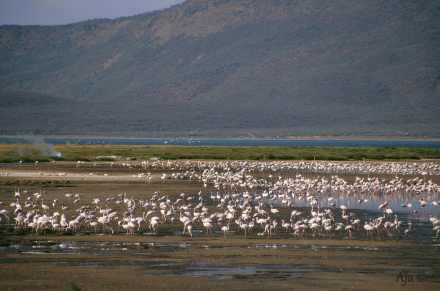
6 Days / 5 Nights – Kenya's Rift Valley Soda Lakes & Maasai Mara Camping Safari

10-Day Game drive & Birding Bogoria, Serengeti, Mara, Ngorongoro, Amboseli Park

8-Day: Maasai Amboseli L Navasha Bogoria Aberdare National Park
— All loaded —
Kenya |Operators
View All Operators






Kenya |Attractions
View on MapLake Bogoria |Reviews

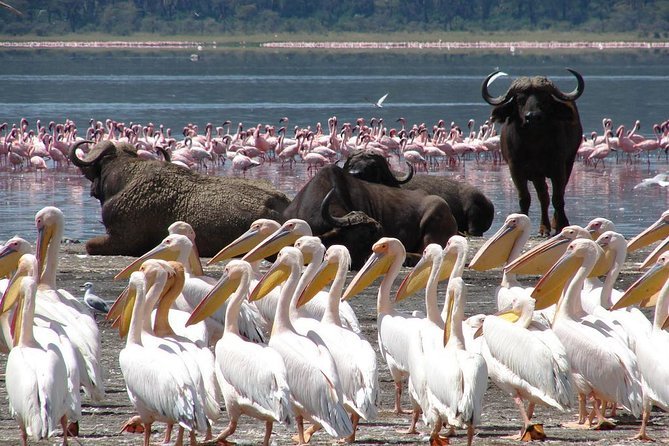
Lake Bogoria is a stark, dramatic landscape that feels like another planet. The main attraction is the vast flocks of flamingos—often numbering in the hundreds of thousands—that create a breathtaking, shimmering pink ribbon along the shoreline. Coupled with the spouting geysers and bubbling hot springs that steam against the backdrop of the Rift Valley escarpment, the scene is unforgettable. The sulfur smell is potent, but it's a small price to pay for such a unique sensory experience. It's less developed than other Rift Valley lakes, offering a raw and powerful encounter with nature. Perfect for a day trip of bird watching and photography.
— All reviews loaded —