Samburu National Reserve - Attraction Guide
Samburu National Reserve
Planning a trip to Kenya/Samburu?
Share your travel plans and get free itineraries and quotes from multiple trusted local operators.
10k+ travelers have submitted inquiries
Tracking the Special Five in Samburu National Reserve
Samburu National Reserve covers 165 square kilometers in the arid northern region of Kenya, sitting approximately 350 kilometers from Nairobi. This protected area operates at an elevation ranging from 800 to 1,230 meters above sea level, creating a hot, dry environment that differs sharply from the southern plains. Non-resident adults currently pay 100 USD for a 24-hour entry permit, though these rates fluctuate—check official county portals before arrival. The reserve relies on the Ewaso Ng'iro River, which serves as a vital water source for over 900 elephants and rare northern wildlife.
Want to visit Samburu?
Compare 5 quality local operators, get custom itinerary and exclusive quotes
Wildlife Adaptations and the Samburu Special Five
Unlike the more famous Maasai Mara, this region supports species specifically adapted to drought and heat. These are collectively known as the Special Five, a group of animals that represent the biological uniqueness of northern Kenya.
Identifying the Rare Northern Species
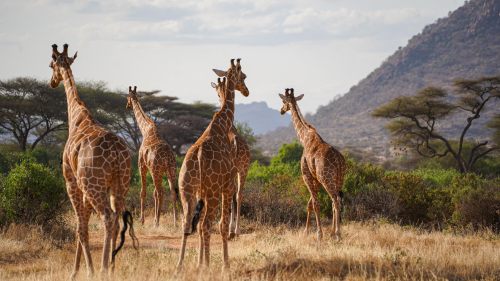
The most striking of the group is the Grevy's zebra, which features thinner, more numerous stripes and larger, rounded ears compared to the common plains zebra. You will also find the reticulated giraffe, easily recognized by its orange-brown polygonal patches separated by thin white lines. The Beisa oryx stands out with its long, rapier-like horns and bold black facial markings. My personal observation suggests that the gerenuk is the most fascinating to watch; this long-necked antelope often stands entirely on its hind legs to reach acacia leaves that other grazers cannot touch. The Somali ostrich, with its distinct blue-grey neck and legs, completes this specialized roster.
Predators and the Legend of Kamunyak
Lions, leopards, and cheetahs are frequently spotted, particularly along the riverine forests where cover is thickest. Samburu earned international fame through the story of Kamunyak, a lioness who famously adopted and protected at least six oryx calves. While such behavior is extremely rare, the high density of leopards makes this one of the best locations in East Africa for seeing these elusive cats during daylight hours. Birders should look for the vulturine guineafowl, which is arguably the most beautiful bird in the reserve, featuring iridescent blue plumage and a bald, vulture-like head.
Planning Logistics and Seasonal Strategy
Reaching the reserve involves a six-to-seven-hour drive from Nairobi via the A2 highway, passing through the town of Archer's Post. The road is paved and generally in good condition, but the final stretches can be dusty and rough.
Navigating the Gates and Entry Points
Archer's Gate is the primary entrance used by most tour operators, leading directly to the most developed part of the reserve. If you prefer a more secluded experience, entering through the West Gate or the Kalama Gate offers quieter tracks and fewer vehicles at sightings. I recommend staying in the western sector if your goal is undisturbed photography, as the central river loops can become crowded during peak holiday windows. Most lodges are situated along the riverbanks, where elephants often wander through the grounds during the heat of the day.
Best Windows for Wildlife Viewing
The core dry season runs from June to October and again from January to February. During these months, the Ewaso Ng'iro River becomes the only reliable water source, forcing wildlife to congregate along the banks. This makes spotting predators much easier. In contrast, the rainy seasons from March to May and November to December bring a flush of green to the thorn scrub. While wildlife disperses more widely during the rains, the birdlife—exceeding 450 recorded species—is at its most active, and the air is clear of the usual haze.
Beyond the Standard Game Drive
While the 4x4 safari is the standard way to explore, the unique geography and cultural heritage of Samburu County allow for a variety of different perspectives.
Cultural Interaction with the Samburu People
The local Samburu people are pastoralists closely related to the Maasai, known for their vibrant red shukas and intricate beadwork. Visiting a local manyatta (village) provides insight into their nomadic lifestyle and how they manage livestock in such a harsh climate. These visits are usually organized through your lodge and provide vital income for the community. It is worth noting that the Samburu culture remains very traditional, and the elders often share knowledge about local medicinal plants during guided bush walks.
Exploring Buffalo Springs and Shaba
Samburu National Reserve is part of a larger ecosystem that includes Buffalo Springs and Shaba National Reserves. You can often cross the river to Buffalo Springs for a small additional fee or with a combined permit. Shaba is more rugged and was the setting for the Joy Adamson film Born Free. Each reserve has a slightly different feel; Shaba is dominated by volcanic cones and springs, while Buffalo Springs features more open grassland. If you have three days or more, splitting your time between these adjacent areas provides a more complete understanding of the northern frontier.
Want to visit Samburu?
Compare 5 quality local operators, get custom itinerary and exclusive quotes
Frequently Asked Questions
What is the current entry fee for non-residents?
As of late 2024, the daily entry fee for non-resident adults is 100 USD. This permit is valid for 24 hours and is typically paid at the gate or via the eCitizen portal.
How does Samburu differ from the Maasai Mara?
Samburu is significantly drier and hotter, featuring unique wildlife species like the Grevy's zebra that are not found in the Mara. It also attracts fewer tourists, making for a quieter and more exclusive safari environment.
Is it safe to drive to Samburu from Nairobi?
The A2 highway is a major paved road and is safe for travel, though the drive takes approximately six to seven hours. Most travelers prefer using a 4x4 vehicle to navigate the unpaved tracks inside the reserve itself.
What should I pack for a Samburu safari?
Lightweight, neutral-colored clothing is essential due to daytime temperatures often reaching 35 degrees Celsius. You should also bring high-quality binoculars and a dust-proof bag for your camera equipment.
Can I see the Big Five in Samburu?
You can see four of the Big Five: lions, leopards, elephants, and buffalo. Rhinos are currently rare within the main reserve, though they can be tracked at the nearby Sera Conservancy.
Samburu |Tours
View All Tours
5-Day Wings Over Wilderness Fly-in Safari With Safarilink Aviation

7-Day Expedition to the Arid North
7-Day Safari Across Four Legendary Kenyan Parks
10-Day Wild Kenya Aberdare Samburu, Ol Pejeta & Mara
7-Day Classic Kenya Safari: Ol Pejeta, Samburu, Lake Nakuru & Lake Naivasha
16-Day Ultimate Kenya Wilderness Camping Safari

7-Day Samburu & Masai Mara Luxury Safari: Kenya North to South

9-Day Mount Keya climb with Safari in Samburu
Kenya |Operators
View All Operators






Kenya |Attractions
View on MapSamburu |Reviews

This is a park definitely worth seeing. Rugged, diverse landscape with lots of vegetation, small mountains, and the river along its southern edge. A beautifully scenic park to drive around with a multitude of paths you can follow as you search for wildlife. It has a very wild and isolated feel to it so when you come across wildlife in varying surroundings, it makes it memorable trip you’ll never forget

A the beautiful semi-arid landscape with unique flora and fauna species such as reticulated giraffe, Gerenuk, Grevy zebra, somali ostrich, wild dogs, striped hyena, kudu, desert rose among others.

Nestled in Kenya's north, Samburu National Reserve isn't just a wildlife haven, it's a luxurious sanctuary. Lavish lodges like Samburu Intrepids and Sopa Lodge cater to discerning travelers, while Elephant Bedroom Camp and Soroi by Larsens offer intimate wilderness experiences. But the real stars of the show are the Samburu Five; Gerenuk:Graceful gazelles balancing on their hind legs to reach leaves on acacia trees. Reticulated giraffe: Towering beauties adorned with a mesmerizing net-like pattern. Gravy zebra: Sleek stripes distinguish these endangered stunners from their common cousins. Somali ostrich: The world's biggest bird, strutting with flamboyant feathers and impressive speed. Beisa oryx: Majestic antelope with long, straight horns and striking black and white markings. Beyond these iconic creatures, Samburu boasts lions, leopards, cheetahs, elephants, and over 450 bird species. The Ewaso Ng'iro River carves through the arid landscape, creating a vibrant oasis teeming with life. So, if you're seeking a Kenyan adventure infused with luxury and a unique cast of wildlife characters, Samburu National Reserve awaits.

It's a long drive from Nairobi but worth it. It's got all sorts of wildlife and the Sarova Shaba camp is great. It's not crazy like the Mara

I love adventuring new places, as much as there are fewer animals here in Samburu compared to Maasai Mara, I enjoyed the adventure.
— All reviews loaded —